It’s Food and Widely Eaten
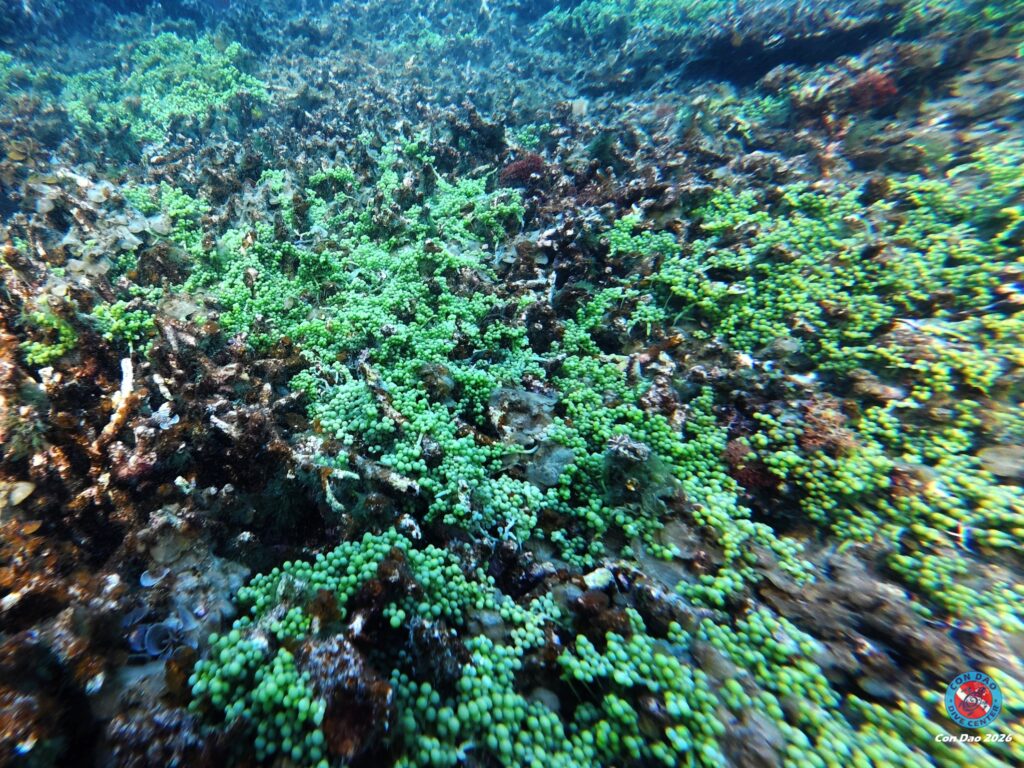
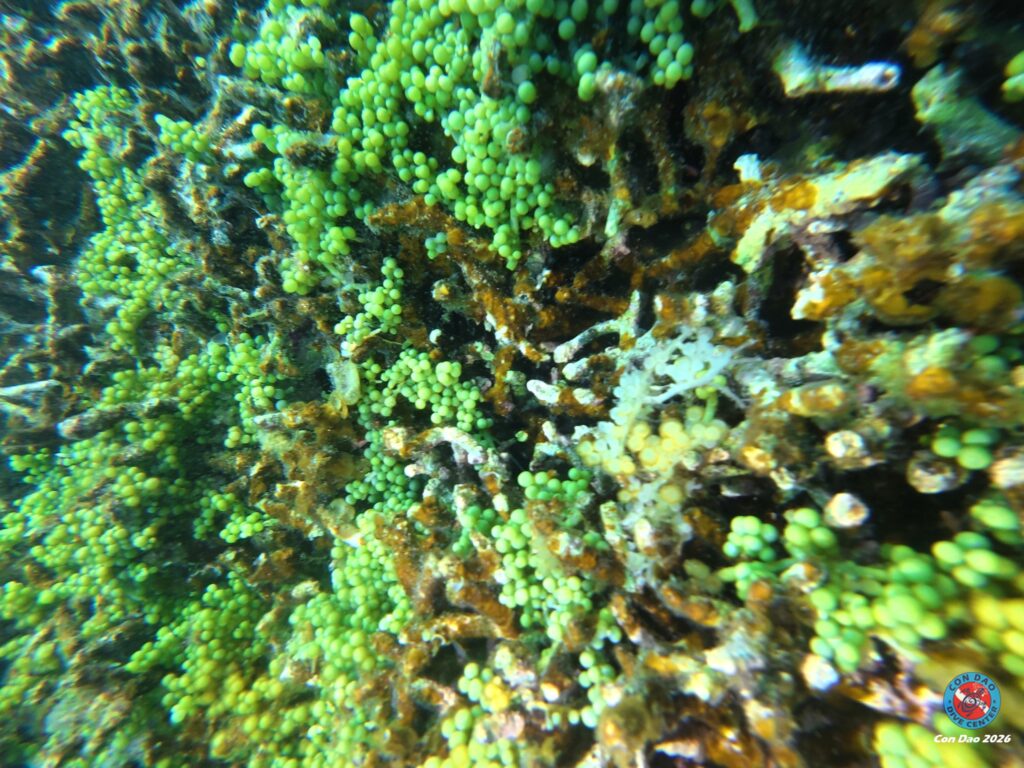
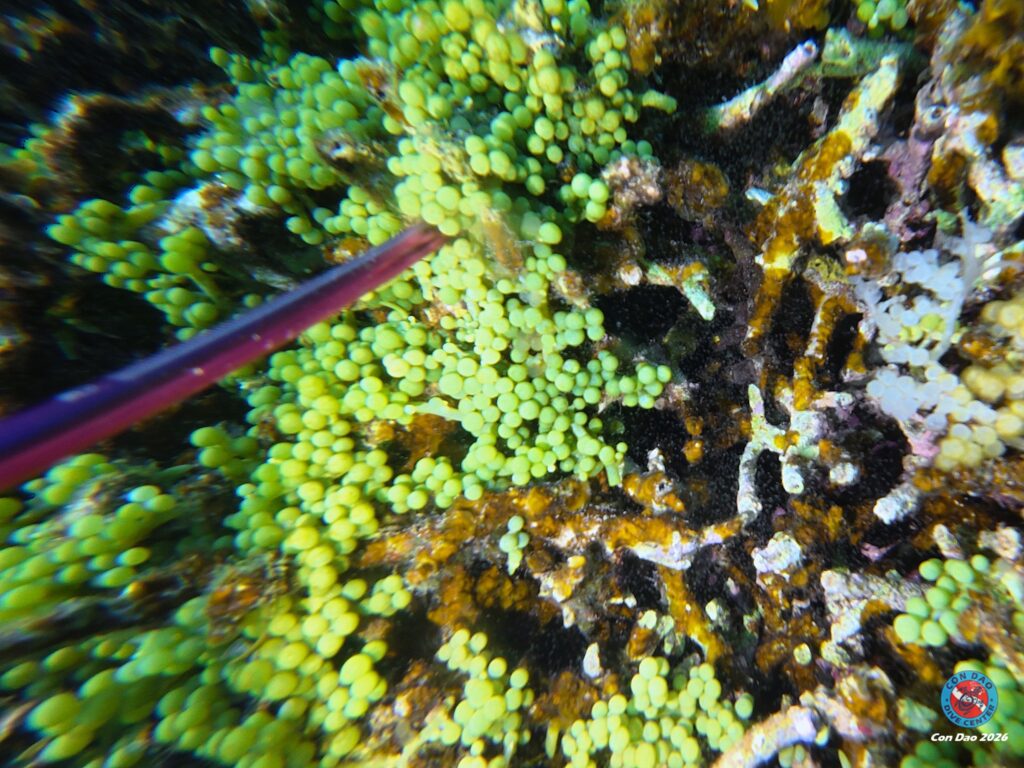
Caulerpa racemosa, known as sea grapes or green caviar, is eaten fresh across Southeast Asia and the Pacific. The texture is firm and slightly briny, with a clean pop when you bite into each small sphere. In Vietnam, it is sold at coastal markets and also farmed commercially in Khanh Hoa province.
Nutritionally, it contains protein, dietary fibre, vitamins, minerals, and polyunsaturated fatty acids including omega 3. It is low in calories. Several countries in the region have been cultivating it in tidal ponds for decades, including the Philippines, Japan, and Vietnam.
If you want to try it, it is best to buy from aquaculture farms. The farmed product is the same species, available fresh or salt preserved, and supports a supply chain that does not impact natural reefs.
What a 2022 Lab Study Found
A study published in Frontiers in Oncology (2022), indexed on the National Library of Medicine, tested C. racemosa extract on HeLa cervical cancer cells in a laboratory setting.
The extract increased the expression of pro apoptotic proteins BAX and cleaved caspase 3, while suppressing Bcl 2. This combination pushed the cancer cells toward apoptosis, or programmed cell death. Cell viability decreased at both 24 and 48 hours after treatment.
What this means is that the extract showed activity against cancer cells in vitro, meaning in a controlled lab environment rather than in a living organism.
What this does not mean is equally important. This is a single study using cell cultures. It has not been tested in animals or humans, and there is no approved therapy based on this research. The authors describe it as preliminary and recommend further study.
It’s a finding worth following, not a health claim.
The Role of Caulerpa in Reef Ecosystems
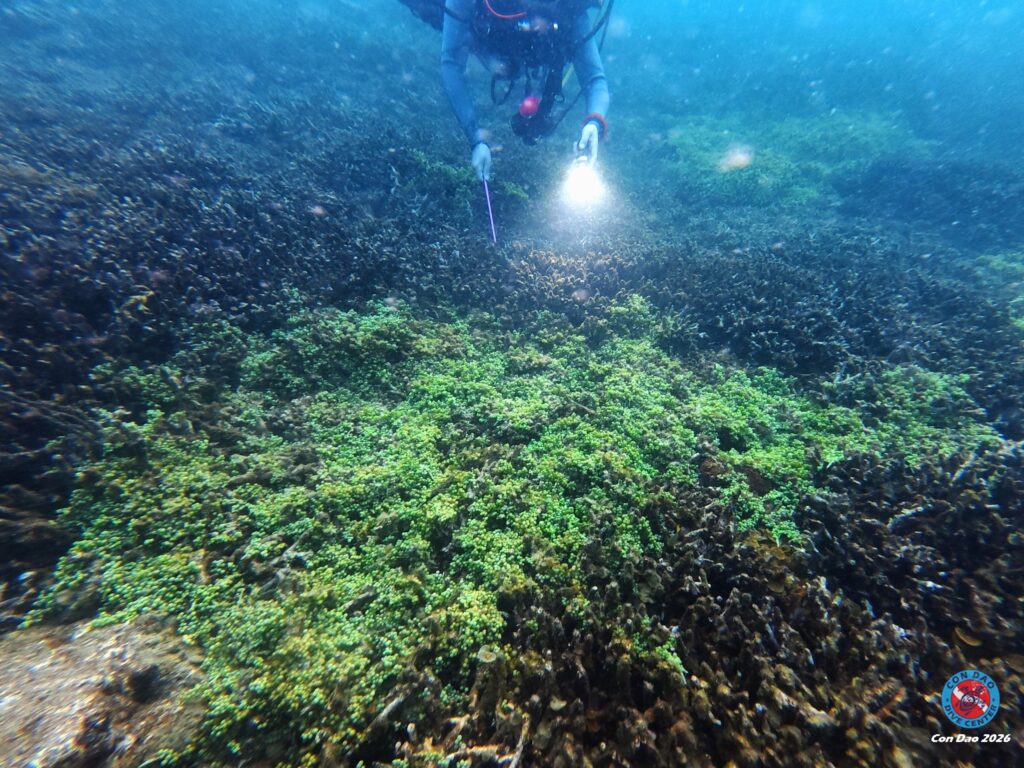
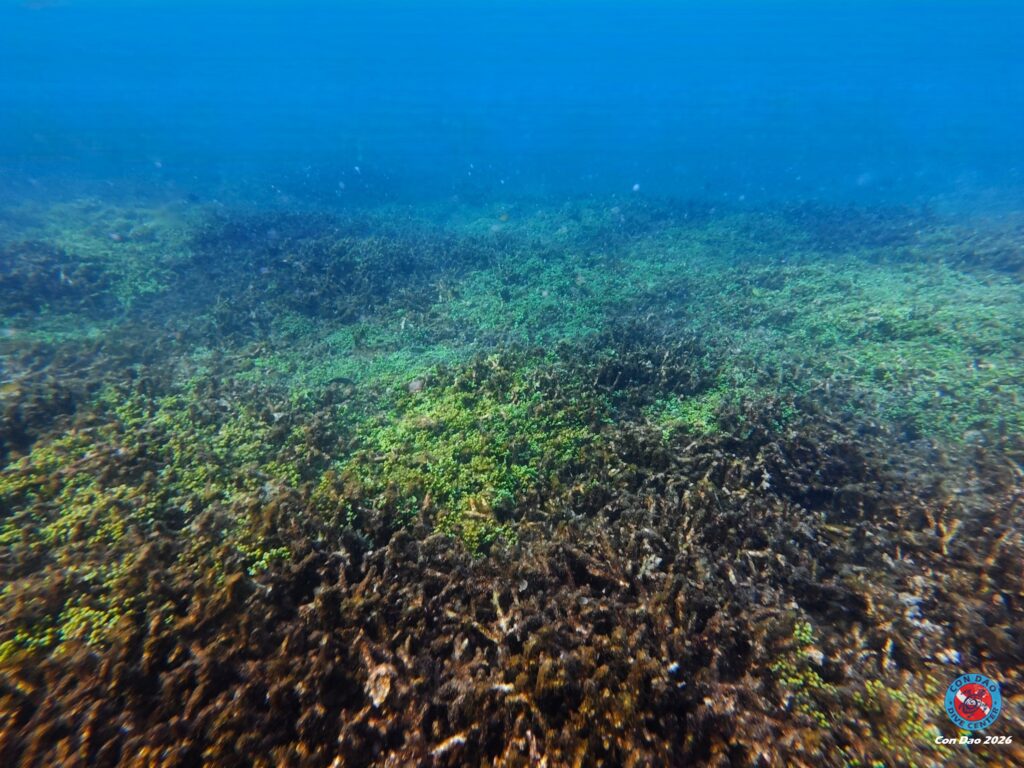
On the reef, Caulerpa racemosa is a functional species. It helps stabilise sandy substrate, provides cover for small invertebrates and juvenile fish, contributes to nitrogen cycling, and serves as a food source for green sea turtles and some reef fish.
It is also a fast growing alga. When conditions change due to disturbance, anchor damage, or storms, it is often among the first species to recolonise bare substrate. This makes it useful in early reef recovery, while also reflecting the current condition of the reef.
Many of these reef ecosystems can be experienced firsthand through guided dives in Con Dao.
Removing it disrupts these functions. In Con Dao National Park, where marine protection rules apply, collecting any reef organism, including algae, is not permitted.
Farmed Not Foraged A Better Way to Source Sea Grapes
Vietnam has commercial sea grape production in Khanh Hoa, particularly in Van Phong Bay, and in Phu Quoc. The farmed product is the same species, grown in tidal ponds without impacting wild reef populations. It is available fresh at coastal markets and in some restaurants, and also exported in salt preserved form.
The reef colony in Con Dao is not a food source. It is part of a living system performing essential ecological functions.
CONCLUSION
Caulerpa racemosa is a common reef alga with two notable aspects beyond its appearance. It is edible, and early laboratory research suggests it deserves further scientific attention. Neither of these changes its role on the reef.
In Con Dao National Park, it remains part of the underwater ecosystem, serving as food for turtles, shelter for fish, and a component of a system that has taken time to develop. Where it grows matters.
Explore more about marine life, dive guides and reef science on the Con Dao Dive Center blog.
Frequently Asked Questions
Is Caulerpa racemosa safe to eat?
Yes. C. racemosa is widely consumed fresh across Southeast Asia and the Pacific. It contains no known toxins at normal consumption levels. It is best to buy farmed products from reputable sources rather than harvesting from reef environments.
Can I collect sea grapes from the reef in Con Dao?
No. Con Dao is a national park and marine protected area. Collecting any organism from the reef including algae is not permitted. Sea grapes farmed in Khanh Hoa and Phu Quoc are available for purchase and consumption.
What is the difference between Caulerpa racemosa and Caulerpa lentillifera?
Both are edible sea grapes, but C. lentillifera, the species commonly farmed in Vietnam, typically has larger and rounder vesicles with a softer texture. C. racemosa forms smaller and denser clusters, with a slightly firmer bite and sometimes a more pronounced marine taste. Both belong to the same genus and share broadly similar nutritional characteristics.