Series: From Collapse to Comeback – Con Dao Reef 2024–2026 by Con Dao Dive Center.

Looking down at bleached plate coral on a damaged reef in Con Dao, Vietnam
Foliose plate coral seen from above, bleached white after the 2024 to 2025 marine heatwave. This colony had been growing here for years.

We Knew It Was Bad Before We Got in the Water

We’ve been diving these reefs since 2013. We know what they’re supposed to look like.

So when the heatwave hit in 2024 and temperatures stayed high for weeks, we knew it was bad before we even got in the water. Corals have no way to escape. They cannot move, migrate, or wait out the heat somewhere cooler. When temperatures rise beyond their tolerance, they bleach. And when the heat persists, they die.

What we found underwater was hard to process. Not because it was dark or deep, but because there was so much damage. Table corals that had taken decades to grow were reduced to bare white skeletons. Branching Acropora fields that once sheltered hundreds of fish had gone quiet.

Looking down at the coral reef from above, the scale of the coral reef damage in Con Dao was unlike anything we had seen before.

We kept diving anyway. Documenting, measuring, trying to understand what was left.

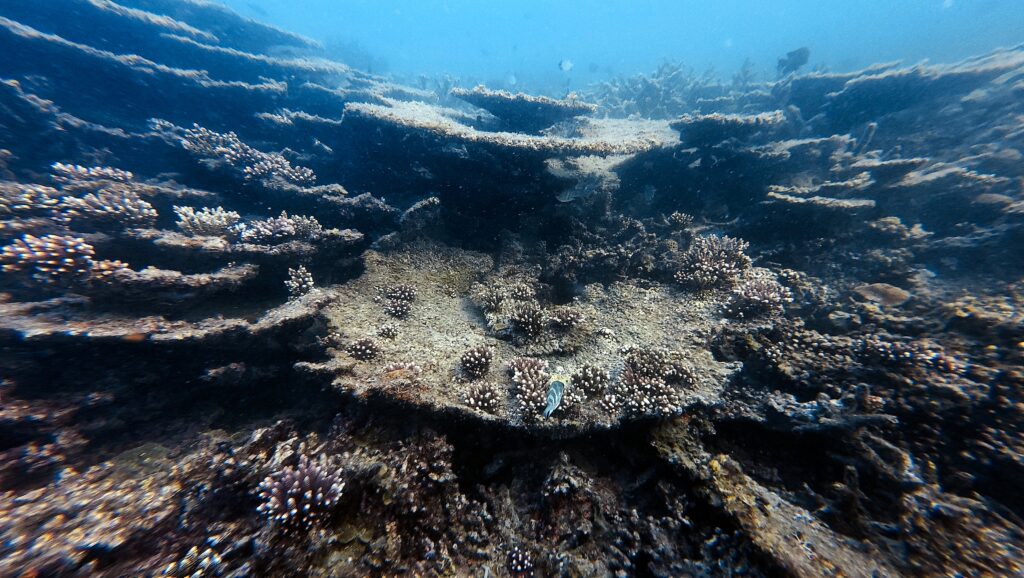
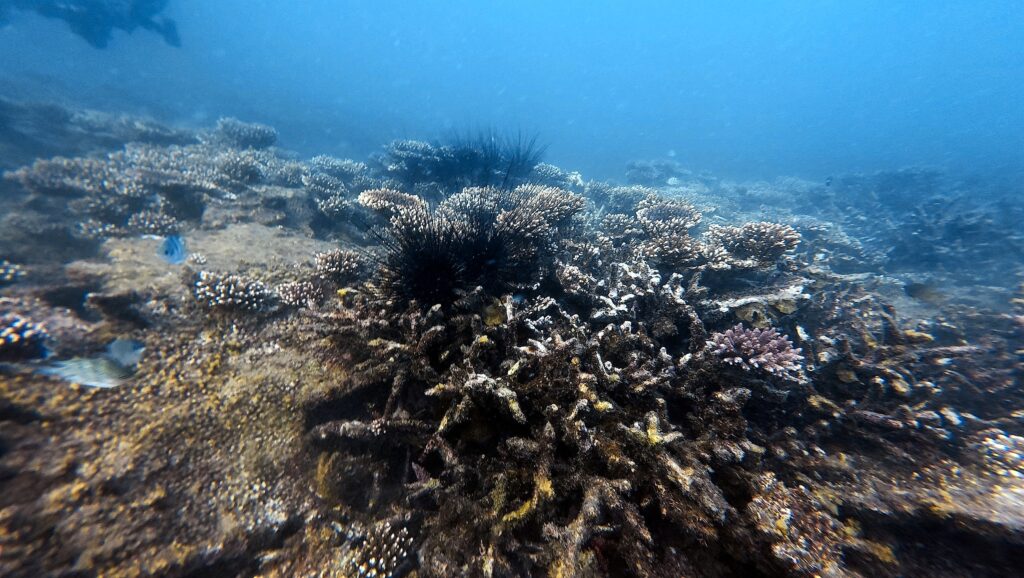
Wide angle view of coral reef damage in Con Dao, with sea urchin visible among recovering and degraded coral structures
A long spined sea urchin on the reef slope at Con Dao. Around it, a mix of dead framework and early signs of recovery.

What Coral Reef Damage Actually Looks Like

Coral reef destruction is rarely uniform.

Some corals bleached completely and died within weeks. Others remained in a pale, stressed state for months before either recovering or collapsing. In deeper areas, where temperatures stayed slightly lower, some colonies survived with minimal bleaching.

In many areas, the bleached coral reef appeared as a stark white landscape, broken only by scattered patches of surviving coral.

The more complex reality is what came after. When coral dies, the structure it creates disappears. Fish lose shelter. The reef loses stability. Algae rapidly colonises exposed substrate, competing with juvenile corals for space.

A reef does not just lose coral during bleaching. It loses the entire ecosystem built around it.

The long-spined sea urchin (Diadema setosum) visible in some areas is actually a positive sign. These urchins graze algae, helping keep substrate open for future coral settlement. Their presence suggests that the reef is still functioning at some level, even in a damaged state.
Some of It Survived

We want to be clear. The reef took a serious hit. This is not a good news story.

But not everything was lost. Some coral colonies survived. Certain massive corals, particularly Porites, showed higher tolerance to heat stress. A few deeper table corals remained almost untouched.

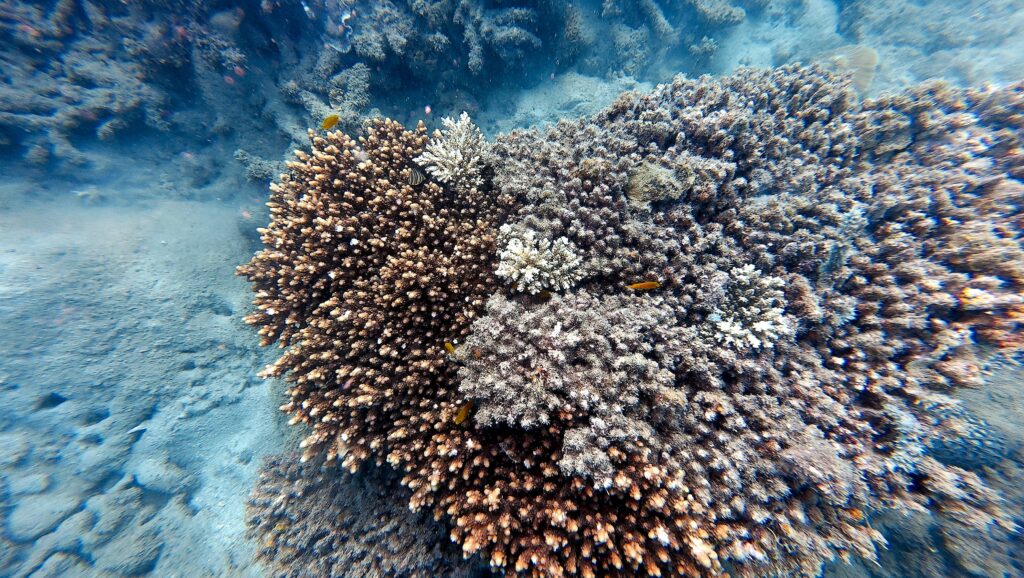
Dense Acropora coral colony showing signs of partial bleaching, with fish swimming nearby at Con Dao dive site
This Acropora colony came through the heatwave with partial bleaching at the tips. The fish around it never left

And then, something unexpected began to appear. Tiny coral recruits. New polyps settling onto bare substrate where nothing had grown before. Some no larger than a coin. These are not corals that survived the heatwave. They are entirely new growth. These early signs of coral reef recovery are small, but critical for the future of the Con Dao coral reef system.

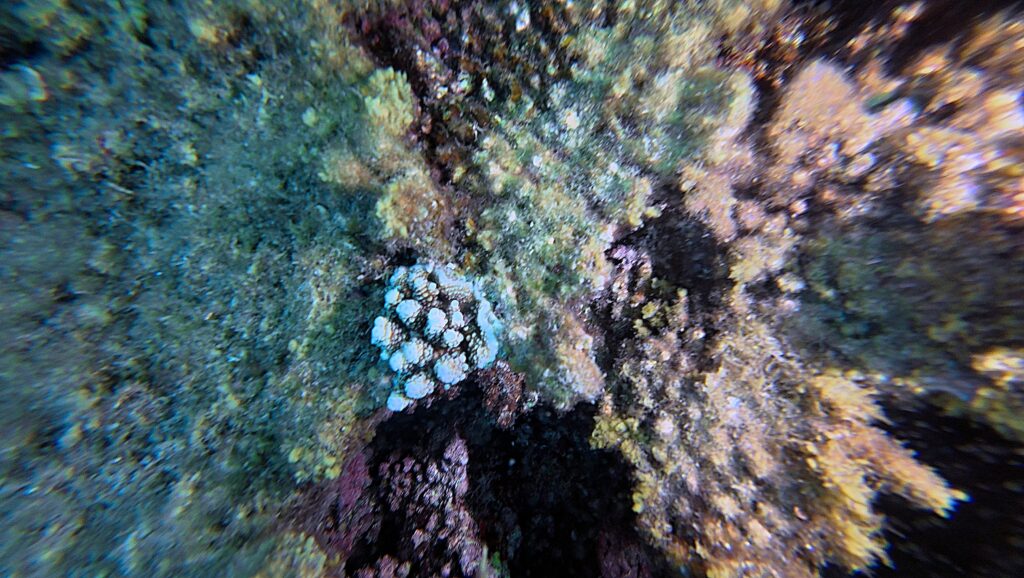
Looking down at Con Dao reef with a small juvenile coral colony growing among algae covered substrate.
A juvenile coral colony, barely the size of a hand, growing up through algae covered substrate. This is exactly what we came looking for.

Why We Keep Looking Down

Looking down at the coral reef from above reveals patterns of coral reef damage and recovery that are not visible from a diver’s normal perspective. From this angle, we can see where algae has taken over, where substrate remains available, and which coral colonies are actually recovering rather than just appearing intact. Returning to the same location, same depth, and same frame over time allows us to track real change.

Con Dao has one key advantage: protection.

Within the national park, trawling is prohibited, anchoring is controlled, and human impact remains relatively low. This does not prevent coral bleaching caused by global heatwaves. Nothing does. But it gives the reef a chance to recover once conditions stabilise. Many reef systems across Southeast Asia are recovering much more slowly because human pressure never stopped.

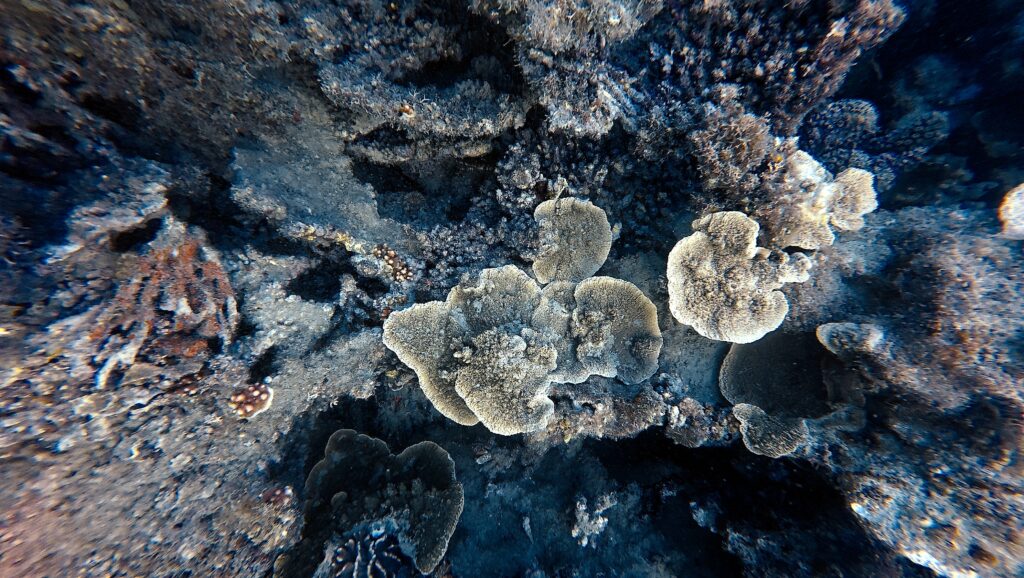
Recovering coral reef at Con Dao showing new juvenile coral growth on bleached table coral substrate, with fish present
New juvenile corals growing on the skeleton of an old table coral. This is what the beginning of recovery looks like at Con Dao.

The Key Is Giving Them a Chance

Coral reef recovery is slow. Growth rates are measured in centimetres per year. The large table corals lost during the 2024–2025 bleaching event may not return within our lifetime.

But the small coral recruits appearing today represent the beginning of reef regeneration. If they remain undisturbed, if temperatures stay within survivable limits, and if the reef continues to be protected, they will grow.

Coral reef conservation in Vietnam plays a critical role in allowing damaged reefs like Con Dao to recover. The coral reef destruction was real. The damage is still visible everywhere. But beneath it, something small has started again.

We think that is worth paying attention to.

Read more stories from the reef on the Con Dao Dive Center blog
Learn more about Con Dao Dive Center

FREQUENTLY ASKED

What caused the coral reef destruction in Con Dao? 

The 2024 to 2025 marine heatwave raised sea surface temperatures beyond coral tolerance thresholds for an extended period, triggering mass bleaching and widespread coral mortality across Con Dao’s reef systems.

What is coral reef bleaching? 

Coral bleaching occurs when elevated water temperatures cause corals to expel their symbiotic algae (zooxanthellae), turning white and becoming vulnerable to starvation and disease. If temperatures drop in time, corals can recover; if not, they die.

Is the coral reef in Con Dao recovering? 

Recovery is in its earliest stages. New coral recruits have begun settling on bare substrate, and some colonies survived the bleaching event. However, full structural recovery will take decades. 

Can I still dive or snorkel at Con Dao after the bleaching event? 

Yes. While significant damage occurred, Con Dao still offers exceptional diving and snorkelling. Marine life remains abundant, and witnessing a reef in recovery has its own profound value.
👉 Want to see this for yourself? Con Dao Dive Center runs daily dive trips from Tourist Pier at 7:45 AM. Explore our day trip